
3D engineering & visualisation

Connect the design
to its physical consequences.

Engineering teams need to move between geometry, analysis and design decisions without losing the relationship between them. Varindor develops computational technology for solid modelling, meshing, physical analysis, optimisation and scientific visualisation. We can compose these capabilities into custom engineering tools that help users examine alternatives and understand the effects of a change.

See what we can compose
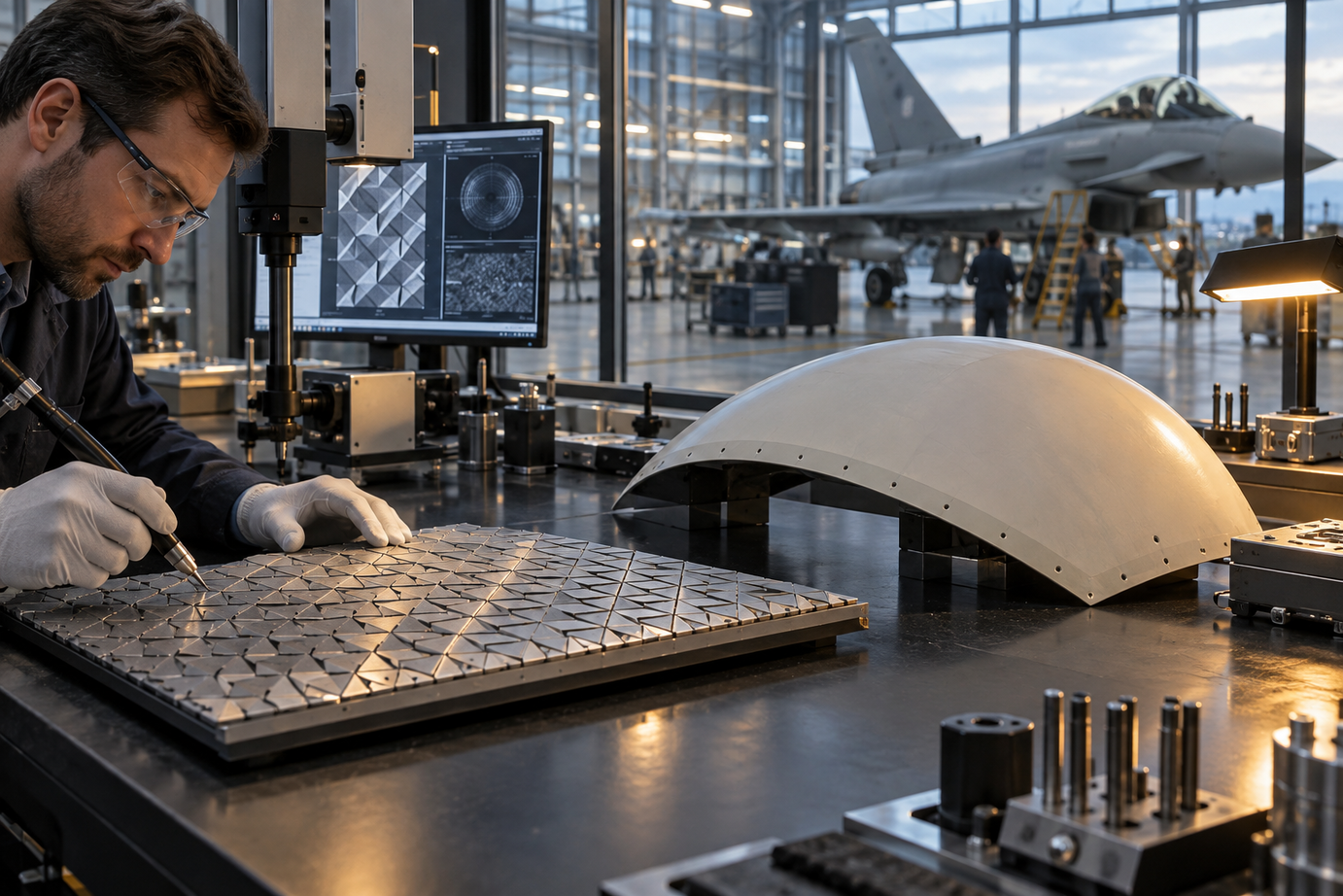
An engineering material sample and aircraft in a hangar

Why it matters

A useful model supports
an engineering decision.

The shape of a component is only part of its design. Loads, materials, interfaces, operating conditions and competing requirements determine whether it is suitable. Connecting those concerns makes a 3D environment useful for investigating performance, comparing candidates and explaining a result to the people who must act on it.

What we can bring together

From geometry
to an examined result.

Geometry & model preparation

Create and interrogate solid and spatial representations, then prepare geometry for the analysis it needs to support. Our foundation includes solid modelling, geometric operations, simulation-ready meshing and model exchange capabilities. These can form part of a tailored workflow for a product, component family or specialised engineering task.

Physical analysis & design exploration

Connect design choices to structural, thermal, electromagnetic or other relevant physical responses. Compare candidate configurations under stated loads and conditions, and use optimisation where the problem supports it. The aim is to make performance trade-offs visible while retaining the context of the design being studied.

Scientific visualisation & review

Inspect geometry and calculated fields together, including quantities such as displacement, temperature and electromagnetic response. Present results in their spatial context so that specialists can investigate them and wider teams can discuss their implications. A review should make clear which model, conditions and result are being examined.

Built to be composed

Engineering depth
behind the visual environment.

We develop the geometry and numerical technology alongside the visualisation layer. We have also built workflows that connect model preparation, physical analysis, design updates and engineering output, giving us a practical basis for composing a customer-specific tool.

A solution can focus on one repeated engineering task or bring several stages into a shared environment. We shape the selected capabilities around the models, decisions and interfaces your team uses, including where detailed analysis needs to sit alongside interactive inspection and comparison.

Our computational foundation

Questions we can help you examine

Make a design change.
Examine what follows.

How does the change affect performance?

Use a representative component or configuration to compare physical responses before and after a design change. Inspect where the result differs and which constraints matter, giving the team a concrete basis for deciding whether to continue with the candidate.

Can a repeated study become a usable tool?

Identify a class of designs or configurations that your team evaluates repeatedly. We can explore an application that organises the relevant inputs, calculations and comparisons around that task, reducing the manual work between separate engineering steps.

Can the wider team understand the result?

Demonstrate how a calculated response appears against the geometry and operating assumptions that produced it. Evaluate whether the view supports a productive design review, including questions about sensitivities, limits and the next piece of evidence needed.

Explore the fit

Bring a design question
or a fragmented workflow.

A representative model, recurring analysis task or example of a difficult design comparison gives us a concrete starting point. Describe the decision, the tools currently involved and the output your team needs.

We can demonstrate relevant geometry, computation and visualisation capabilities, then outline a focused evaluation. The objective is to establish the value of a connected workflow for your engineering problem.