
Autonomous systems

Connect perception,
movement and physical reality.

Autonomous behaviour depends on more than a planner or a perception model. It depends on the quality of observations, uncertainty in the estimated state, the geometry of the environment and what the platform can physically do. Varindor develops the computational capabilities to connect these concerns in custom autonomy and evaluation solutions.

See what we can compose
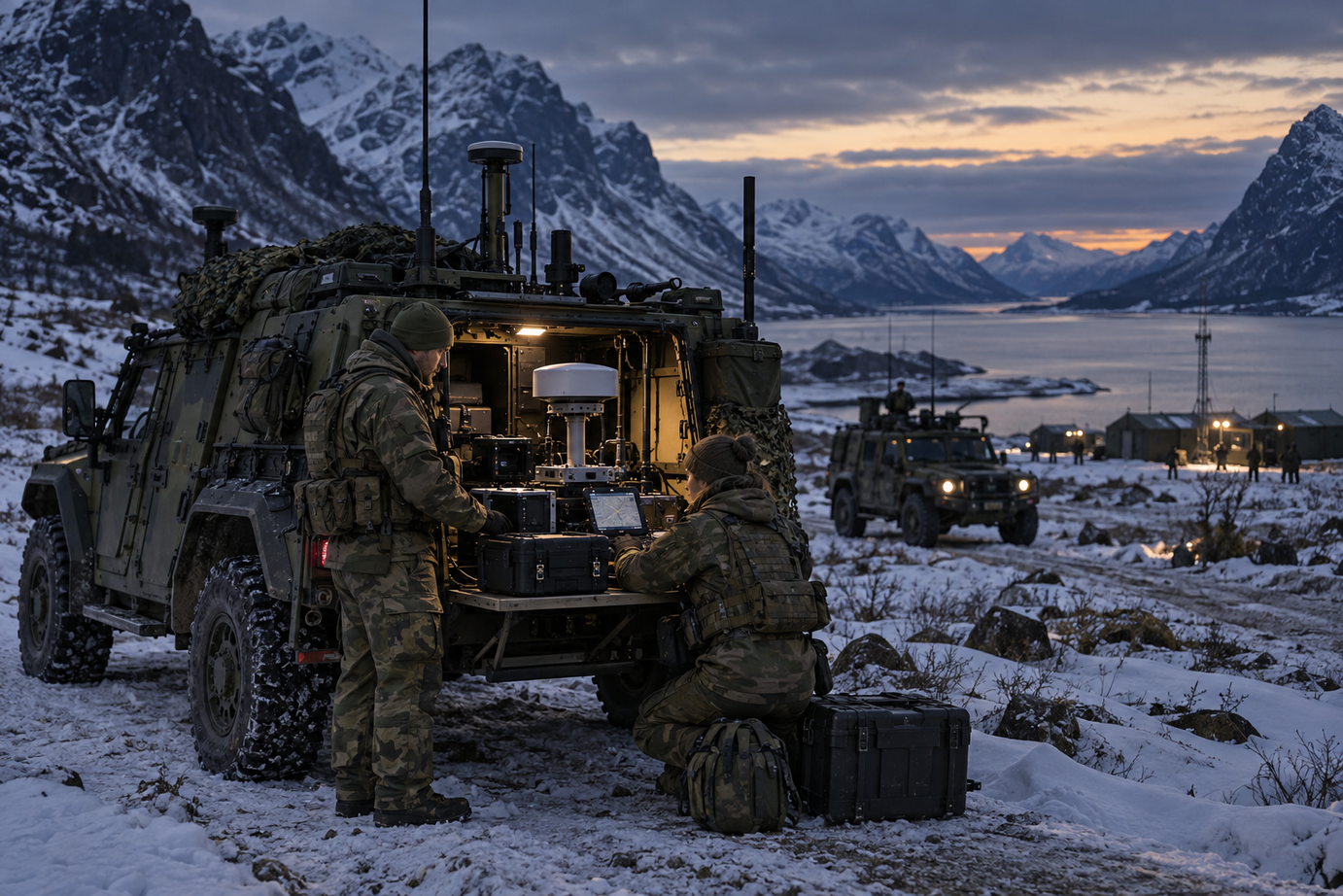
Defence personnel working with navigation equipment beside a vehicle in mountainous terrain

Why it matters

Understand why
a behaviour is feasible.

A plausible route may be unsuitable for the platform. A confident estimate may rely on incomplete or conflicting observations. A change in the environment may invalidate an earlier choice. We help teams examine these dependencies together so that development and evaluation can address the reasons a behaviour succeeds, fails or needs human attention.

What we can bring together

A connected basis
for autonomy engineering.

Perception & state estimation

Work with signal, image and spatial observations to estimate the state of a system and its surroundings. Our computational foundation includes sensor-domain analysis, association, fusion, localisation and mapping. These capabilities can be selected around the sensing arrangement, uncertainty and information available in a customer system.

Navigation & motion planning

Relate routes and movement to geometry, obstacles, timing and platform constraints. Combine spatial reasoning with collision analysis, planning and control mathematics to examine whether a candidate behaviour is workable. This supports development tools that explain the constraints behind a result and the implications of a changed environment.

Physical behaviour & evaluation

Connect planned movement to models of mechanics, actuation and system response. Use simulation and scenario comparison to investigate how a behaviour changes with inputs, constraints or model assumptions. Make the conditions and limits of an evaluation visible to the people deciding what to test next.

Built to be composed

Adapt the capability
to the platform and task.

Our foundation spans the mathematics of sensing and estimation, spatial understanding, planning, control and physical simulation. We can compose the parts a programme needs into an analytical service, development environment or component of a wider autonomy workflow.

The surrounding application and integration are shaped for the platform, its data and the responsibilities of its operators. This makes it possible to tackle a specific gap in an existing system as well as develop a broader solution, with evaluation tied to the behaviour the customer needs to understand.

Our computational foundation

Questions we can help you examine

Evaluate the difficult
parts of the operating envelope.

What happens when observations disagree?

Use a representative sensing problem to examine the resulting estimates, their uncertainty and the information that would resolve ambiguity. Assess whether the outputs are useful to the downstream planner or operator, rather than judging a perception component in isolation.

Does a workable route remain workable?

Change obstacles, timing or platform constraints and examine the consequences for a candidate movement. A focused demonstration can connect the spatial view with the feasibility assessment, helping engineers understand why a route or behaviour needs revision.

Where should physical testing focus?

Compare simulated behaviours across defined conditions and identify sensitive assumptions or limiting cases. Use the results to frame targeted tests and review the boundary between a modelled result and the evidence needed for the intended platform.

Explore the fit

Bring an autonomy
or evaluation challenge.

Tell us about the platform class, the behaviour being developed and the uncertainty that is holding the work back. A representative scenario can support an initial discussion without exposing sensitive operational details.

We can identify relevant computational capabilities and propose a focused demonstration or evaluation. Together, we can define what the result must show and how it would fit your existing development or operating workflow.